Remove the elephant from the savannah or the forest, and the entire ecosystem begins to collapse. These magnificent creatures are not just residents of their habitat — they are its architects, engineers, and gardeners.
The Gardeners of the Wild
An adult elephant consumes up to 300 kilograms of vegetation daily. As it moves across vast landscapes, it deposits seeds — many of them large, hard-coated species that cannot germinate any other way — in nutrient-rich dung piles distributed miles from the parent tree. Studies have shown that certain tree species are almost entirely dependent on elephant gut passage for seed germination.
This makes elephants irreplaceable long-distance seed dispersers — the cornerstone of forest regeneration. When elephant populations collapse, these tree species decline, leading to cascading changes in forest composition that affect every other species in the ecosystem.
“Elephants don't just walk through the forest. They create it. Their footsteps, their feeding, their wallowing — all of it shapes the landscape for hundreds of other species.”
Digging Life From Dry Ground
In the dry season, when surface water disappears, elephants use their tusks and feet to dig in dry riverbeds, accessing subsurface water that other animals cannot reach. These elephant-dug waterholes become critical survival resources for predators, grazers, birds, and reptiles during the harshest months.
Camera trap footage from our partner reserves shows lions, leopards, zebra, buffalo, baboons, and hundreds of bird species regularly using elephant-excavated water sources — demonstrating how a single elephant action creates a cascade of life-sustaining benefit.
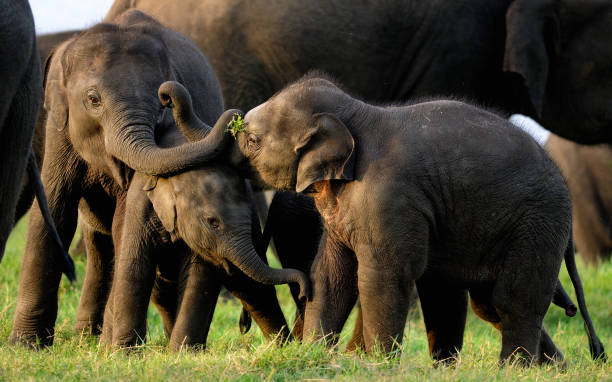
A bull elephant clears vegetation along a centuries-old forest path — creating open corridors that smaller mammals, reptiles, and birds depend on.
Forest Clearers and Path Makers
- Elephants push over trees to access bark and leaves, creating open clearings that regenerate as diverse meadows
- Their paths through dense forest become trails used by every other large mammal in the ecosystem
- Wallowing creates shallow pools that become breeding habitat for amphibians and aquatic invertebrates
- Bark stripping exposes dead wood that supports thousands of insect species critical to the food web
- Elephant urine and dung return massive quantities of nitrogen to the soil, fertilizing vegetation for miles around
The Climate Connection
Recent research published in Nature Climate Change has quantified the climate value of African forest elephants. By promoting the growth of large, slow-growing hardwood trees (by suppressing faster-growing competitors), elephants effectively make tropical forests denser carbon stores. A forest with elephants sequesters significantly more carbon than one without them.
Economists have estimated the carbon sequestration value of a single African forest elephant at approximately $1.75 million over its lifetime. This makes protecting elephants not just a moral imperative but an economically rational climate strategy.